
Vermont’s 2027 EV Mileage Fee: Costs, Inspections & What Owners Should Know
A guide for electric vehicle owners and shoppers in Vermont including the Central Vermont area of Barre, Montpelier and surrounding communities.
Own an electric vehicle in Vermont, or thinking about buying one? Beginning January 1, 2027, Vermont is introducing a mileage-based user fee for covered battery electric vehicles BEVs). The change makes your mileage-and the odometer records from your annual Vermont state safety inspection-part of determining what you owe.
The starting rate is 1.4 cents per mile, capped at $178 per mileage reporting period. However, most continuing owners will receive their first mileage assessment in 2028, and transition credits may reduce the amount due. Here is what the change means for your budget, your inspection and your next vehicle purchase.
What Is Vermont's New EV Mileage Fee?
The mileage-based user fee, or MBUF, is Vermont's approach to collecting a road-use contribution from covered battery electric vehicles. These vehicles do not buy gasoline, so their owners do not contribute through gasoline taxes when driving them. The Legislature cites declining fuel-tax revenue and rising transportation costs as reasons for the change.
For covered BEVs, the program replaces the previous EV infrastructure-fee framework. It does not replace ordinary registration charges or the cost of a Vermont state inspection. Special transition charges and credits help move owners into the new system. See Act 168, Sections 7-10, for more details and to review the enacted provisions for more details.

Does the Fee Apply to Electric Vehicles and Hybrids?
The initial program covers battery electric vehicles registered in the statutory "pleasure car" category. Vehicle classification matters; the law does not simply apply the same charge to every vehicle with an electric motor.
- Battery electric vehicle (BEV): Runs entirely on electricity. Covered BEV pleasure cars enter the mileage-fee program.
- Plug-in hybrid electric vehicle (PHEV): Uses a rechargeable battery and a gasoline engine. PHEVs are outside the initial BEV mileage program and retain a separate EV infrastructure fee.
- Conventional hybrid (HEV): Uses gasoline and electric assistance without plugging in. This BEV mileage fee does not apply.
Comparing your options? Explore our used hybrid, plug-in hybrid and battery electric vehicles in Montpelier.
How Much Will You Pay?
Multiply the miles driven during your reporting period by $0.014, up to the $178 cap. A flat-rate option is also available under the law.
| Miles in reporting period | Mileage fee | Flat fee |
|---|---|---|
| 5,000 | $70 | $178 |
| 8,000 | $112 | $178 |
| 10,000 | $140 | $178 |
| 12,000 | $168 | $178 |
| 15,000 | $178 - capped | $178 |
When does the flat fee become cheaper? The calculation reaches $178 at approximately 12,714 miles; above that level, both approaches reach the same amount before credits. Lower-mileage drivers, those driving approximately 12,714 mile or less, can pay a smaller charge through the mileage option.
These examples cover only the road-use assessment fee. They exclude registration and Vermont State safety inspection charges, and your first amount due may be lower after eligible credits.
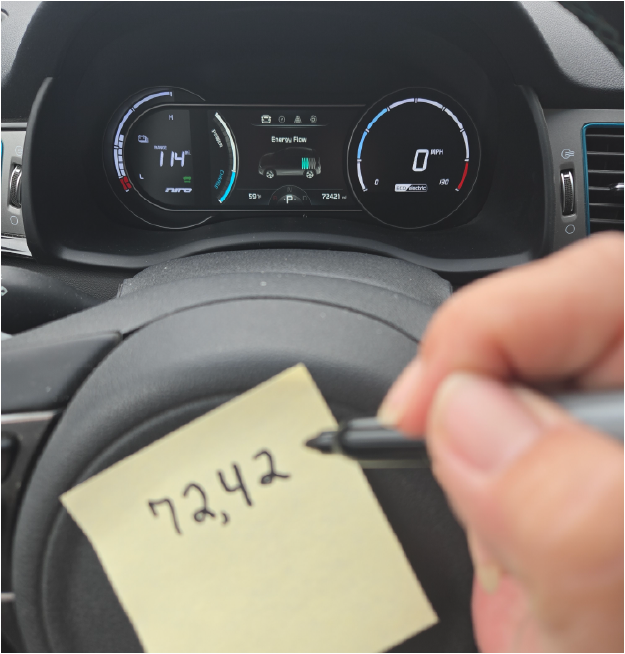
Why Annual Vermont State Inspections Matter for BEVs
An electric powertrain does not remove the need for an annual Vermont safety inspection. EVs still have safety-related equipment that needs attention. Vermont's inspection law continues to apply.
Inspections also provide odometer readings for the mileage program. If missing inspections or required reports leave DMV unable to determine your mileage, the law provides a $178 default assessment. For a lower-mileage driver, that could mean losing the benefit of a smaller mileage-based charge.
Keeping required inspections current also matters for eligibility for the initial transition credits. Choosing the flat fee does not excuse inspection requirements.
For Vermont state inspections in the Barre-Montpelier area, Central Vermont Auto Mart serves drivers from Montpelier, Barre, Berlin, Northfield, Waterbury and nearby communities. Request an appointment before your sticker expires.
When Does My Mileage Period Start-and What About Credits?
January 1, 2027 is the program's start date, but reporting periods do not all begin that day. Under the transition rules:
- Already registered in Vermont on December 31, 2026: Your initial reporting period begins with the first annual inspection on or after January 1, 2027.
- Newly registered in Vermont on or after January 1, 2027: Your initial reporting period begins on the registration date.
The State's September 2026 outreach report explains that most continuing owners will receive their first assessment in 2028. Selling a covered vehicle during 2027 can bring an assessment sooner.
During the transition, an initial registration or renewal before the first reporting period ends carries a one-time road usage charge of $89 for a one-year registration or $178 for a two-year registration. Provided all required annual inspections have been obtained, that payment reduces the initial mileage assessment. If that transition charge was not paid, the law instead allows credit for the qualifying EV infrastructure fee paid at the most recent registration before January 1, 2027. These are alternative credit provisions, not two credits automatically added together.
For example, a $140 mileage assessment with an eligible $89 credit would leave $51 due. Eligible credit remaining after the first assessment carries forward toward future mileage fees for the vehicle. Your registration history and VSI (Vermont Safety Inspection) compliance determine which provisions apply.
What If I Sell or Trade My Electric Vehicle Midyear?
A sale or change in ownership ends the mileage reporting period. The owner must report the ending odometer reading to DMV in the required manner. Moving the vehicle's registration to another state or terminating its Vermont registration also counts as a terminating event.
For a mileage-based example, 4,000 miles between the start of the reporting period and a sale would produce a $56 assessment before applicable credits. The calculation uses those miles, rather than assuming a full year of driving.
Under the annual lump-sum option, the law directs DMV to mail an assessment within 14 days after the reporting period ends. Payment is generally due by the earliest of the next required registration renewal, registration termination, or sale or lease termination, with a special renewal-timing rule for periods ending within 60 days of renewal. Because a sale can close the period and trigger payment obligations at the same time, confirm DMV's settlement instructions before completing the transaction.
The law also provides a refund after a terminating event for payments exceeding the amount owed. Do not assume this is a simple monthly refund of the flat fee. Keep the sale date, odometer disclosure and fee records so the account can be reconciled with DMV.
Vermont EV Mileage Fee: Frequently Asked Questions
Do miles driven outside Vermont count?
The initial odometer-based calculation uses total miles driven during the reporting period. It does not automatically separate Vermont miles from travel in New Hampshire, New York or elsewhere. Do not deduct out-of-state miles yourself.
Will Vermont track where I drive?
The September 2026 outreach report describes odometer-based reporting rather than location sharing. An odometer shows distance traveled, not the route or destinations.
Do I pay the mileage fee to the inspection station?
The inspection station reports the odometer reading. The road-use fee is administered through DMV; it is separate from the charge for performing your inspection.
Can I pay in installments?
The law authorizes a pay-as-you-go option only if the Commissioner makes it available. Do not assume installment enrollment is available until DMV confirms it.
What if I miss an inspection and receive the $178 default assessment?
The law provides a limited credit opportunity if you obtain an inspection within 60 days after the registration renewal associated with the default assessment. DMV must have sufficient odometer data to calculate a lower fee. The difference becomes a credit toward a future mileage fee; this provision does not waive inspection requirements.
What if my assessment or odometer reading is wrong?
Keep your inspection and mileage records and contact DMV promptly. The law allows an assessment appeal within 45 days after the assessment is mailed.
Does the $178 flat fee let me skip my inspection?
No. The flat-rate option changes mileage reporting obligations under the fee program, but it does not remove other inspection or odometer-disclosure requirements.
Should this change stop me from considering an electric vehicle?
Consider the fee alongside the vehicle's price, charging access, electricity costs, insurance, maintenance needs and expected mileage. A BEV, plug-in hybrid or conventional hybrid may fit different households. Compare the overall ownership costs and how you will use the vehicle will help you decide what works best for you.
Plan Ahead for Your Inspection and Your Next Vehicle
Keep your annual inspection current, retain registration and odometer records, and review DMV notices as the program begins. If you expect to sell, trade or move your BEV out of Vermont, check the reporting and payment steps before the transaction.
Central Vermont Auto Mart is here to help with your Vermont state inspection and your vehicle search. Visit us at 365 River Street in Montpelier, or call our service team at 802-200-3858.
Want to stay informed about automotive news and industry changes?
 Published October 26, 2026
This article summarizes the enacted law and Vermont's September 2026 outreach report. Individual assessments depend on registration, inspection, mileage and payment records. Always follow DMV's current, most up-to-date instructions for reporting, payment and credits.1
- Vermont Act 168 of 2026, Sections 7-10: program framework, vehicle coverage, rates and transition provisions.
- 23 V.S.A. Chapter 43: mileage-based user fee law effective January 1, 2027.
- 23 V.S.A. § 1222: vehicle inspection requirements.
- Vermont Agency of Transportation, September 15, 2026: Report on Mileage-based User Fee Public Outreach and Education; User Experience.
- Vermont Department of Motor Vehicles: current administrative instructions and account assistance.
