
Vermont’s “Max Tax” on Heavy Trucks & Trailers: What Changed in 2026 and What’s Next
If you're buying a heavy-duty truck or trailer in Vermont, you may have heard of the "Max Tax." It's the cap on Vermont's 6% Vehicle Purchase and Use Tax for certain heavier vehicles, and it can change what you owe at registration by thousands of dollars.
The rules have already shifted as of January 1, 2026, and legislators are now considering additional changes during the 2026 session. Below is a plain-English explanation of where we were, what changed, and what may be coming next.
The rules have already shifted as of January 1, 2026, and legislators are now considering additional changes during the 2026 session. Below is a plain-English explanation of where we were, what changed, and what may be coming next.
💰 What Is the "Max Tax"?
Vermont charges a Vehicle Purchase and Use Tax when a vehicle is purchased and registered. For most vehicles under 10,100 pounds, the calculation is straightforward:
You pay 6% of the taxable cost, with no cap.
For certain heavier trucks and trailers, Vermont applies a maximum cap. In those cases, the tax is:
The lesser of 6% of the taxable cost OR $2,486 per vehicle (the current maximum).
In other words, if 6% of the purchase price would be more than $2,486, the Max Tax cap may limit what you pay.
You pay 6% of the taxable cost, with no cap.
For certain heavier trucks and trailers, Vermont applies a maximum cap. In those cases, the tax is:
The lesser of 6% of the taxable cost OR $2,486 per vehicle (the current maximum).
In other words, if 6% of the purchase price would be more than $2,486, the Max Tax cap may limit what you pay.
🕰️ Where Vermont Used to Be
Historically, eligibility for the Max Tax was commonly tied to how a truck was registered for weight purposes (practically speaking, the weight the owner registered the vehicle to operate at). This approach was widely understood by businesses and buyers who rely on work trucks and commercial equipment.
That older system generally aligned the tax treatment with how the vehicle would be used on the road.
That older system generally aligned the tax treatment with how the vehicle would be used on the road.
🔄 What Changed on January 1, 2026
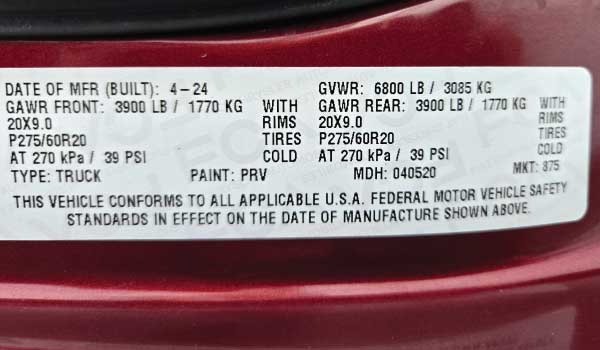
As of January 1, 2026, the Vermont Department of Motor Vehicles announced a major change in how the Max Tax is determined for trucks: the cap is now calculated based on a truck's empty, as-delivered weight (often described as the vehicle's delivered or "shipping" weight), rather than the weight a customer chose to register it at.
That means a truck that previously qualified for the cap may no longer qualify if its empty/as-delivered weight is below the threshold, even if it is built and intended to work at higher operating weights.
What "Shipping Weight" Means in Plain English
Draft legislative language defines "shipping weight" as the stock, as-built weight of a new vehicle before optional equipment, passengers, or cargo are added. It includes standard fluids (like oil and coolant), but does not include fuel.
The key takeaway: shipping weight is intended to reflect what the vehicle weighs as it leaves the factory (in a baseline configuration), not what it can safely carry or operate at once put to work.
The key takeaway: shipping weight is intended to reflect what the vehicle weighs as it leaves the factory (in a baseline configuration), not what it can safely carry or operate at once put to work.
🏛️ What's Being Discussed for 2026 and Beyond
The Legislature is now reviewing how the Max Tax should apply going forward. Based on current discussions, three major areas are getting the most attention:
1) Using GVWR Instead of Shipping Weight
One major proposal is to base eligibility on GVWR (Gross Vehicle Weight Rating) rather than shipping weight. GVWR is the manufacturer's rated maximum operating weight for the vehicle (including cargo, passengers, and equipment). Supporters argue that GVWR better reflects how work trucks are designed and used in the real world.
If this approach is adopted, more legitimate heavy-duty work trucks could potentially qualify for the cap based on the vehicle's rated purpose, not merely what it weighs empty.
2) Whether Trailers Should Keep the Cap
As initially proposed, legislation could eliminate the Max Tax cap on trailers entirely. That would mean trailers would be taxed at the full 6% of taxable cost without the $2,486 limit.
Advocacy efforts are focused on keeping the cap for "working trailers" used by contractors, trades, agriculture, and businesses that rely on trailers as essential equipment.
Advocacy efforts are focused on keeping the cap for "working trailers" used by contractors, trades, agriculture, and businesses that rely on trailers as essential equipment.
3) Trailer Coaches and Motor Coaches: A Separate Treatment
Another active discussion is whether certain types of trailers or motor coach-style vehicles should be excluded from the capped rate. Current draft language groups trailer coaches with motor homes under the standard 6% tax treatment, rather than allowing the capped Max Tax rate.
The practical effect: some recreational-style units could be taxed like passenger vehicles rather than being treated like commercial/work equipment.
The practical effect: some recreational-style units could be taxed like passenger vehicles rather than being treated like commercial/work equipment.
🔍 What Buyers Should Do Right Now
If you're considering a purchase in 2026, it's smart to confirm how your specific unit will be treated before you finalize paperwork and registration:
- Ask which weight measure is being applied (shipping/empty weight vs. GVWR).
- Review the vehicle's manufacturer documents and weight ratings.
- If you're buying a truck for work use, confirm whether it still qualifies for the Max Tax cap under current DMV guidance.
📌 Where Things Stand Today
The Max Tax cap is currently $2,486, and Vermont's approach to determining eligibility has already changed as of January 1, 2026. Additional adjustments are actively being debated in Montpelier, including whether GVWR should be used instead of shipping weight and whether trailers and certain coach-style units should be treated differently.
Because language can shift as bills move through the process, buyers should expect continued discussion and possible amendments during the session.
Because language can shift as bills move through the process, buyers should expect continued discussion and possible amendments during the session.
📰 We'll Keep Watching This Issue
For Vermont contractors, small businesses, and anyone purchasing higher-priced work equipment, changes to the Max Tax can have a real cost impact. We'll continue tracking updates so buyers can make informed decisions with the clearest information available.

Want to stay informed about automotive news and industry changes?
 Published February 25, 2026