
What Vermont Car Buyers Should Know About Dealer Fees and Advertised Prices
Understanding how vehicle pricing works can help you avoid surprises, compare options more clearly, and make more confident buying decisions.
Buying a vehicle today often begins online, where shoppers compare prices, features, and value before ever visiting a dealership. While this has made the process more convenient, it has also introduced new questions-especially when it comes to how vehicle pricing is presented.
One of the most common areas of confusion for buyers involves dealer fees, advertised prices, and what is actually included in the number you see. Understanding how these work can help you make more informed decisions and avoid unexpected surprises during the buying process.
What Is a Dealer Documentation Fee?
A dealer documentation fee, often referred to as a "doc fee," is a charge some dealerships apply to help cover administrative costs associated with processing a vehicle sale. These costs may include paperwork preparation, title processing, and compliance-related tasks.
While some dealerships choose not to charge a documentation fee at all, others may include one as part of their pricing structure. In Vermont, regulatory guidance allows dealers to charge a documentation fee, provided it relates to actual services performed and is applied consistently. However, the amount charged can vary significantly from one dealership to another.
How Advertised Vehicle Pricing Works in Vermont
Vermont guidelines require that advertised vehicle pricing must be presented clearly and not be misleading. The advertised price-whether shown online, on a vehicle window sticker, or in advertising-should accurately reflect the price being offered, excluding only government-required charges such as sales tax, title, and registration.
Disclosures should not contradict or significantly change the primary price being presented. Any additional charges that apply should be clearly communicated in close proximity to the advertised price so that consumers can easily understand the full cost.
Recent FTC Guidance on Vehicle Pricing
The Federal Trade Commission (FTC) has recently taken a more active role in addressing how vehicle pricing is presented to consumers. In communications to dealerships, the FTC outlined several practices that may be considered misleading or deceptive if not properly disclosed.
Examples cited by the FTC include:
- Advertising a price that does not reflect all required fees
- Advertising a price that reflects rebates or discounts not available to all consumers
- Advertising a price that fails to take into account required down payments
- Conditioning a price on consumers using dealer-arranged financing
- Requiring the purchase of additional items not included in the advertised price
- Advertising vehicles that are not actually available
These examples highlight how pricing can sometimes appear straightforward at first glance but may involve additional conditions or costs that are not immediately clear to the consumer.
While pricing practices can vary, understanding these guidelines can help consumers make more informed decisions when comparing vehicles.
Where Car Buyers Can Experience Confusion
Because pricing practices differ between dealerships, buyers may encounter situations where the advertised price does not fully reflect the final purchase amount. This can occur when additional dealer charges, conditions, or requirements are introduced later in the process.
In some cases, pricing shown on third-party websites may not include all relevant details, or offers may be tied to specific financing terms. These variations can make it more difficult for consumers to compare vehicles on an equal basis.
Transparent pricing also helps create a more accurate "apples to apples" comparison when shopping for a vehicle. A price that includes all dealer charges-or eliminates them altogether-may appear higher at first glance than a price that does not clearly disclose additional fees. Understanding what is included in the advertised price allows buyers to make more meaningful comparisons and avoid unexpected increases in the final cost.
Understanding Pricing and Financing Conditions
In recent guidance, regulators have emphasized that advertised vehicle prices should not be conditioned on consumers using dealer-arranged financing or meeting specific eligibility requirements. The price presented should be available to all qualified buyers, excluding only standard government-required charges such as taxes and registration.
Some dealerships may also advertise additional incentives or conditional offers separately, which may apply only to certain customers. Understanding the difference between an advertised price and optional incentives can help buyers make clearer, more accurate comparisons.
A Simpler Way to Understand Vehicle Pricing
For many buyers, the most important factor is clarity. When pricing is presented in a straightforward way, it becomes easier to compare options, understand value, and make confident decisions.
Transparent pricing focuses on reducing confusion and presenting vehicle prices in a way that is easy to understand from the start.
Take a look at the two examples below. When pricing is clearly presented, you can quickly understand the true cost of the vehicle and make accurate comparisons-whether a dealer includes fees in the price, adds them separately, or charges no dealer fees at all.
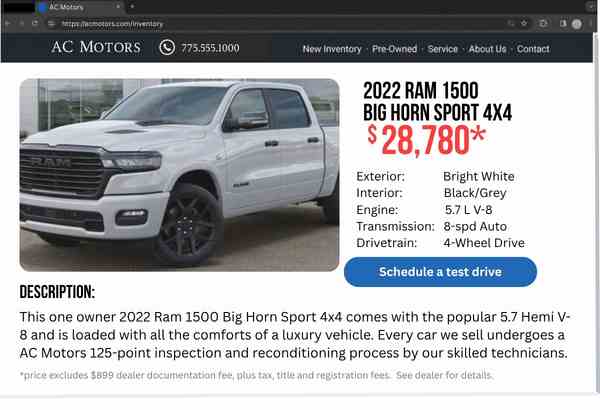
Example of advertised vehicle pricing where additional dealer fees are disclosed separately, which would increase the final purchase price beyond the amount initially shown.
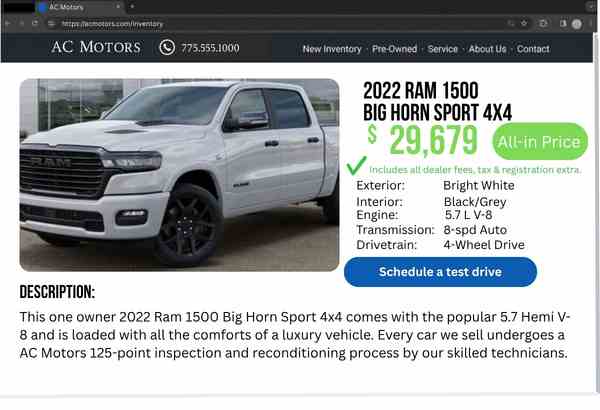
Example of clear, all-in vehicle pricing where the price shown reflects the cost of the vehicle, with dealer fees already included and only taxes and registration remaining.
Frequently Asked Questions About Dealer Fees
No. A dealer documentation fee is optional and not required by law.
Fees are expected to be applied consistently and in accordance with applicable regulations.
Pricing should be presented clearly and not in a misleading way. Any applicable mandatory dealer charges should be disclosed appropriately and in close proximity to the advertised price, which needs to include these fees.
An advertised price includes any price shown online, on a vehicle, or in advertising materials and should accurately reflect the offer being presented, including any mandated dealer fees, excluding only government-required fees. The FTC also dictates that the price should be available to all and any incentives/rebates only available to select customers must be disclosed separately and not included in the advertised all-in price.
Yes. Pricing displayed on a vehicle is generally considered advertised pricing and should follow the same guidelines.
No. Advertised pricing should not be conditioned on financing requirements, although separate incentives or offers may apply to certain financing programs.
Final Thoughts for Car Buyers
Understanding how vehicle pricing works can help you shop more confidently and avoid unnecessary confusion. Taking the time to review what is included in a price-and asking questions when needed-can make a significant difference in your overall experience.
Clear, transparent pricing helps create a smoother path from research to purchase, allowing you to focus on finding the right vehicle for your needs.
 |
Browse our used vehicles with transparent pricing and no dealer fees to see how clear, upfront pricing makes shopping easier.
 |
Have questions about pricing or how dealer fees work? Our team is happy to help.
Want to stay informed about automotive news and industry changes?
 Published April 2026